Monday, 24 June 2013

an old-time summer day


The solstice has come and gone, all so fast somehow. Still, summer stretches out before us, and we intend to make the most of it. Yesterday we took another day trip out to Stewiack and back home along the eastern coast of the Minas Basin. My pictures are in no particular order today, except to tell a pastoral story...

This wonderful abandoned farm lays along the eastern shore of Minas Basin where so many houses are for sale. Too far from the "action", it requires a certain amount of self-reliance
 to live in so lonely a place.
So many of my pictures are taken from a moving vehicle hence the blurriness, but I find the composition of this one interesting.

Old farms are carved out of the heavily wooded countryside of Middle Stewiack.
 
We interrupted this lovely threesome during their midday munch.
 
Many of you may already know of my fascination with cows. They are truly exotic to me.

Such a massive, generally docile animal, they fascinate me.
 
This girl, in particular, was my companion for the few minutes spent with her.
 
She was curious about me too.
 
I felt so lucky to spend this little bit of time with her.

The fields of this area feel special somehow.
 
There is so much beauty upon closer inspection
 
an abandoned church in a hayfield
 
 
a barn, now a garage
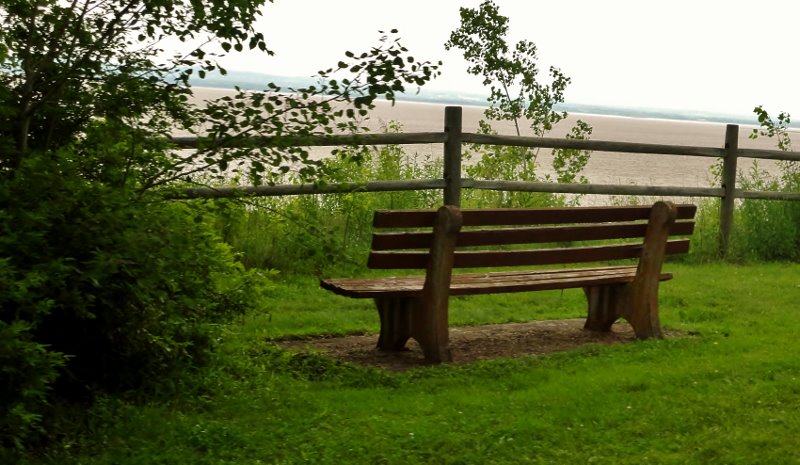
 
a bench over-looking the Minas Basin at the Anthony Picnic Park
 
a magnificent Buttercup Meadow at the same park
 
In Upper Stewiack there is a little historical museum where vignettes of daily life, such as this kitchen, so cute it could be in a doll's house, are displayed throughout.  Wally got great help finding the location of his old Uncle Tom's wooded acreage. They even printed up some pictures of Uncle Tom for Wally. What a coup!

Great graphics on the old oven door from the kitchen above.
 
An old school photo, one of many in the collection, from 1951.
Isn't it great how the photographer made sure to put the boys with the striped shirts together in front!
 
and another from much earlier times
 
a school textbook

and my greatest score: the chance to photograph a collection of old children's playing cards.
 
I just love the wear and tear, the wrinkles and foxing, a term for the oxidation on paper.
 
and just as much I love the defacing of the pictures, coloured in and written on by little hands

These pen and ink reproductions are very much of their time and remind me of John Tenniel's illustrations for Alice in Wonderland

"where are your spectacles?" someone has written in pencil
 
Peace and Contentment.
 
There are so many more pictures to share with you. Perhaps another day.
Til then, please find time to commune with nature in your own way. You won't regret it.
 

Monday, 17 June 2013

living apothecary

 
Boy, I hope you like plants, specifically At Risk Medicinal Plants.  I was lucky to attend an instructional walk in the woods and a "living apothecary" garden on a most beautiful afternoon on the north mountain in Nova Scotia where many of the plants I will show you are native, especially in the forest.
 
Nothing beats a walk in the forest, and add a rushing creek to the mix with hardly a blackfly, and I'm a "happy camper"
 
Deeper into the woods, we crossed a log bridge with a sturdy rope for a handrail


Now we were in the thick of it where the flowers bloom like the shy precious jewels they are
Here grows Blue Bead Lily whose green flower base eventually turns blue
 
a thicket of  7 Lady Slippers, so rare and delicate, that need such particular conditions to grow that they are on the endangered list. While they don't reproduce until they are 7 or 8 years old they can live for an average of 39 years, sometimes even up to 60!

There are 11 different species of Lady Slipper, 4 of which grow in Nova Scotia.
This one is called Pink Moccasin, an exquisite heavily veined beauty.
While its root (which grows well over a foot into the heavily tangled soil, is known for relieving anxiety and stress, its vulnerability makes it not worth using when there are SO many other remedies available like: Valerian, Hops, California Poppy, Passion Flower, Skullcap, Catnip, and Chamomile.
 
Partridge Berry is quite common, especially in Newfoundland; it's flower smells a little like vanilla.
Its leaf and berry are used to prepare the uterus for childbirth. It likes the shade of the forest and is easy to propagate.

a common forest plant, the Starflower
 
Jack in the Pulpit is also know as Indian Turnip but its fresh root is described "like eating a mouthful of pins". Dried, however, the root tastes fine.
 
Jack is very shy, and one must lift his "lid" to see him in his pulpit

There he is!
 
This is a magnificent 10 year old stand of Black Cohosh, famed as an adaptagen to equalize hormones during menopause. Because of its popularity, it is being culled by the ton without being replaced adequately, something to consider when one takes advantage of such products.

Still in bud here, the tall stalks of the Black Cohosh produce a beautiful creamy white flower that has the scent of rotting meat because they are flies, not bees, that it must attract to pollinate it!
 
Even more delicate and yet the same age as the plant above (10 years), the Blue Cohosh likes an alkaline soil, sun and shade. It is native to Quebec, New Brunswick and Nova Scotia.
 
One can always recognize holly by its shiny leaf. This is Oregon Grape Holly, which can be used in place of Goldenseal or Burberry.
 
In amongst the Grape Holly grows Chaledonia, good for the liver

And here is a fine grouping of Mayapple, also known as a liver cleanser and cure for HPV and warts
It grows a male stem and a female stem
 
Below the larger sheltering leaves grows the shy Mayapple flower

It is too pretty for just one picture

The shade-loving Solomon's Seal
 
Wild Ginger, not to be confused with cultivated ginger, will make one vomit

Bloodroot, commonly used in toothpaste and mouthwash for plaque, can be very caustic in large amounts. A black salve made from it has been known to burn a melanoma from the skin but leaving a crater in its wake. Use with caution.
 
Diascorea, also known as Wild Yam, is not native to Nova Scotia, preferring a Zone 7 climate going as far south as Texas. It is widely popular for the relief of symptoms related to menopause.
 
The fine stems of the Wild Yam

The humble Arnica plant that packs a big wallop for relieving and/or eliminating internal injury.
Fortunately this nondescript little plant is very hardy, spreading by its root, for it is often mistaken for an irrelevant weed. A tincture can be made from its flowers.
 
I played around with this picture of a beautiful Hops vine.
 
And finally, the wonderful Slippery Elm, known for its curative gelatinous inner bark that soothes the digestive tract. It's most happy with lots of rain and sun.

A day old pressing of some Slippery Elm leaves, not so scratchy as the American Elm, and just as vulnerable to the awful Dutch Elm Disease that has decimated so many Elms. One of the things that most delights me about living out here in the Annapolis Valley are the amount of giant Elm trees that still stand on country roads.
 
And yes, I'm still working on my Mermaid Book. This was an interesting experiment for me, resituating parts of this dress to form a tail for my mermaid. I used silver and gold gel pens to doodle another layer and add more depth. The background is done in acrylic paint. Magenta is a favourite colour of mine and washes out to a beautiful pink. I am newly acquainted with Pan Pastels which I used, again in magenta, to outline this golden mermaid.
 
 
So that was quite a treatise I laid out for you above. I must add that I am in no way an expert and won't be able to really answer any questions about herbal medicine. It is something that must be done with the advice of someone much more invested than I. Saying that, I do use them and am eager to learn more, including growing my own. One must understand that there is a vast number of people now interested in culling the planet's resources without much thought to replenishing. With knowledge comes responsibility. Take Care. Give Care.
 
Peace